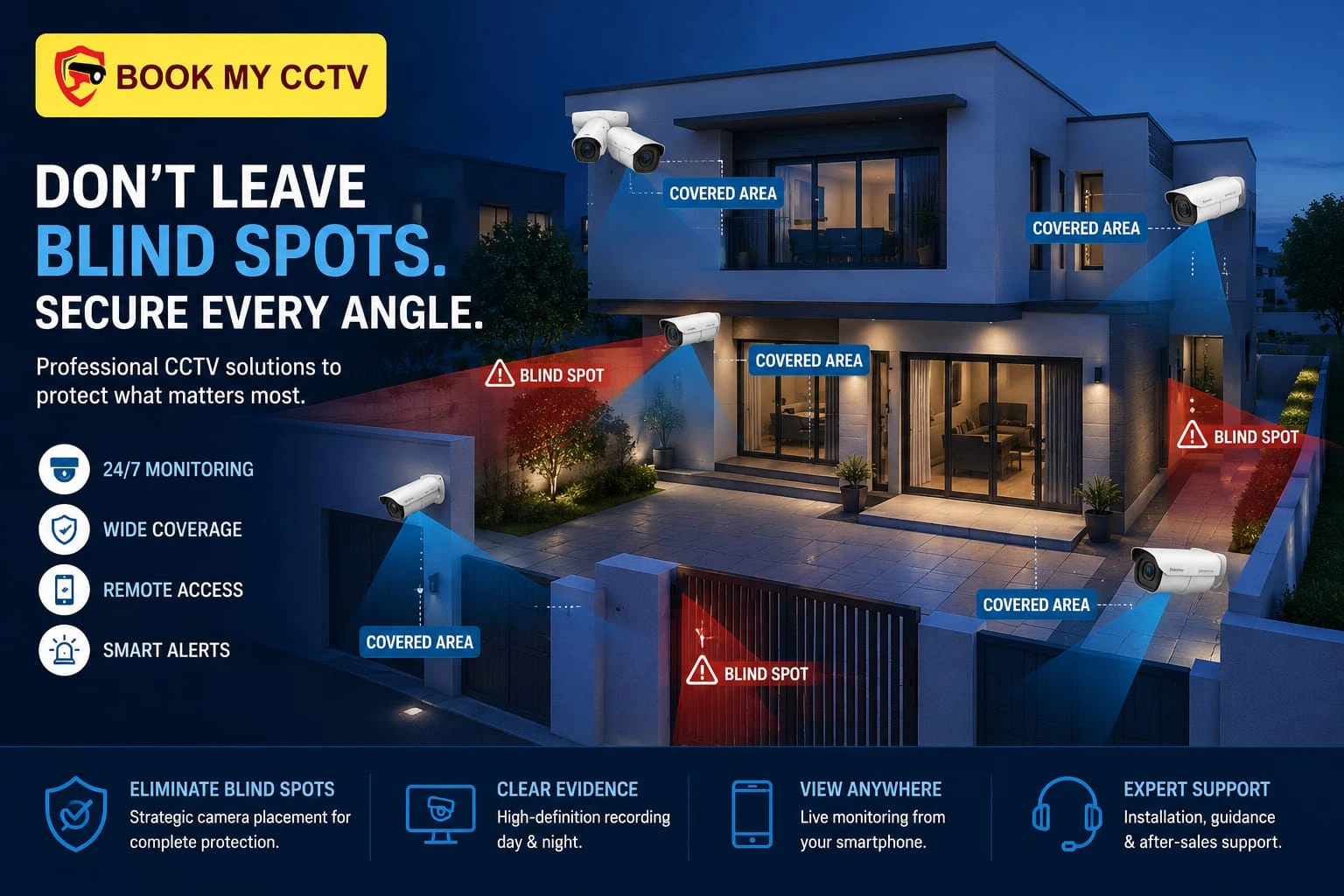
Even the best security camera can miss something. Gaps in coverage, known as CCTV blind spots, leave your property vulnerable. A single blind spot is all an intruder needs.
This guide shows you how to reduce CCTV blind spots step by step. With a few smart changes, you can cover your entire property with confidence.
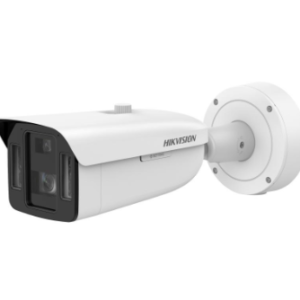
For Example PTZ cameras can help in larger areas where fixed cameras miss gaps. https://bookmycctv.com/product-category/hikvision/ptz-cameras/
What Are CCTV Blind Spots?
CCTV blind spots are areas your cameras can’t see. They might be small gaps between camera angles. They could also be entire sections of your property left unmonitored.
Common blind spot locations include:
- Side alleys and narrow passages
- Behind sheds or large bins
- Areas under balconies or overhangs
- Spots blocked by trees or fences
Even one blind spot can become an entry point for trouble. That’s why reducing CCTV blind spots should be a priority for any security setup.
Why CCTV Blind Spots Happen
Blind spots don’t appear by accident. They usually result from poor planning or changes over time.
Poor Camera Placement
Cameras placed too close together waste coverage. Cameras placed too far apart leave gaps. Getting the spacing right takes careful planning.
Obstructions
Trees grow. Bins get moved. New structures get built. Over time, these changes can block a camera’s view without anyone noticing.
Limited Camera Range
Every camera has a maximum viewing distance and angle. Beyond that range, footage becomes unclear or disappears entirely.
Fixed Camera Angles
Standard cameras stay pointed in one direction. If something changes nearby, the camera can’t adjust on its own.
How to Reduce CCTV Blind Spots Effectively
Now let’s look at practical ways to fix these gaps. Each step helps reduce CCTV blind spots and strengthens your overall security.
You can also review official physical security best practices to improve overall property protection. https://www.cisa.gov/topics/physical-security
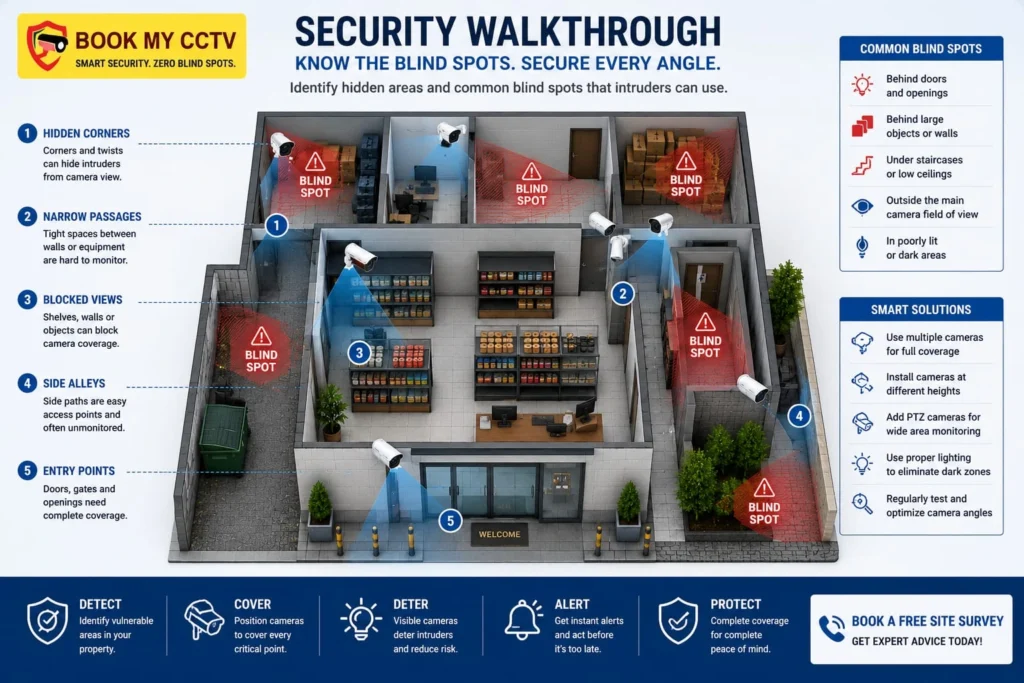
1. Conduct a Property Walkthrough
Walk around your property like an intruder would. Look for hidden corners, dark areas, and points of entry. Note down every spot your current cameras might miss.
This simple exercise often reveals blind spots you never noticed.
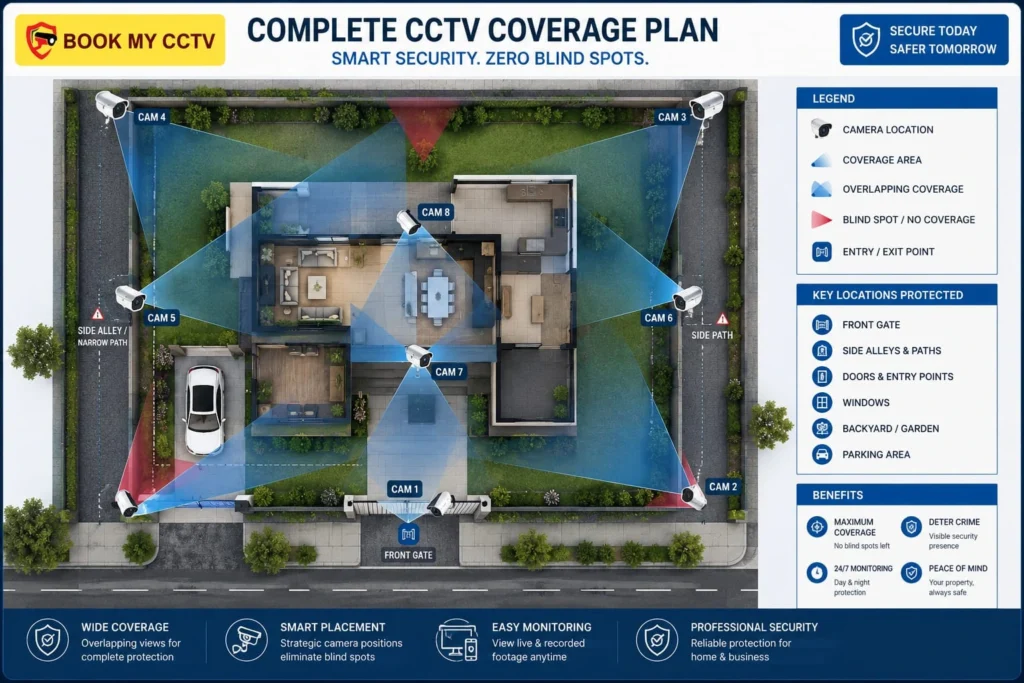
2. Map Your Camera Coverage
Create a basic diagram of your property. Mark each camera’s position and viewing angle. Overlapping coverage areas show you’re on the right track.
Gaps between camera views highlight where blind spots exist.
3. Use Overlapping Camera Angles
Position cameras so their views slightly overlap. This ensures no area falls between two cameras unnoticed. Overlapping angles also provide backup if one camera fails.
4. Add Cameras at Key Entry Points
Focus extra attention on doors, gates, and windows. These are the most common targets for intruders. Covering these areas reduces CCTV blind spots where it matters most.
5. Install Cameras at the Right Height
Cameras placed too low get blocked easily. Cameras placed too high may miss important details like faces. A height of 8–10 feet usually offers the best balance.
6. Choose Cameras with Wider Lenses
Wide-angle lenses cover more ground per camera. This reduces the total number of cameras needed. Fewer cameras with better coverage means fewer blind spots overall.
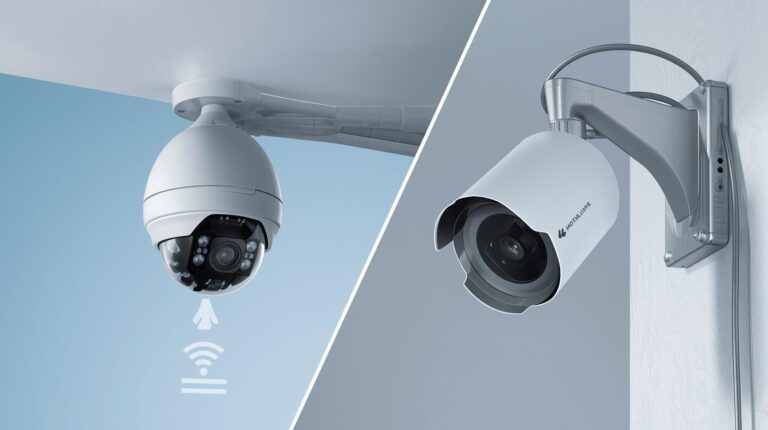
7. Use PTZ Cameras for Flexibility
PTZ stands for Pan-Tilt-Zoom. These cameras can move and adjust their view. https://bookmycctv.com/product-category/hikvision/ptz-cameras/
They’re ideal for covering large or irregular areas where blind spots tend to form.
8. Trim Trees and Remove Obstructions
Check your camera views regularly for new obstructions. Trim back branches. Move bins or equipment that block the lens. Small changes can restore lost coverage instantly.
9. Add Motion-Activated Lighting
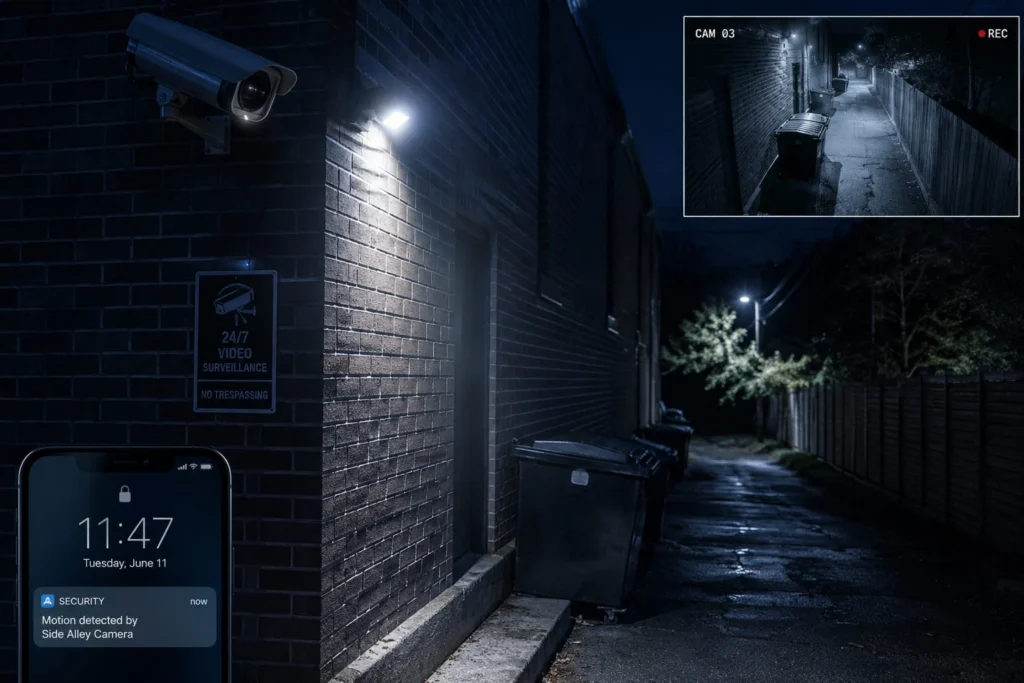
Dark areas create natural blind spots, especially at night. Motion-activated lights illuminate these zones automatically. This helps cameras capture clearer footage after dark.
10. Regularly Test Your System
Schedule routine checks of your camera footage. Walk through blind spot-prone areas and review the recordings. This helps catch new blind spots before they become a problem.
Best Camera Types for Reducing Blind Spots
Choosing the right camera type makes a big difference. Here’s a quick comparison.
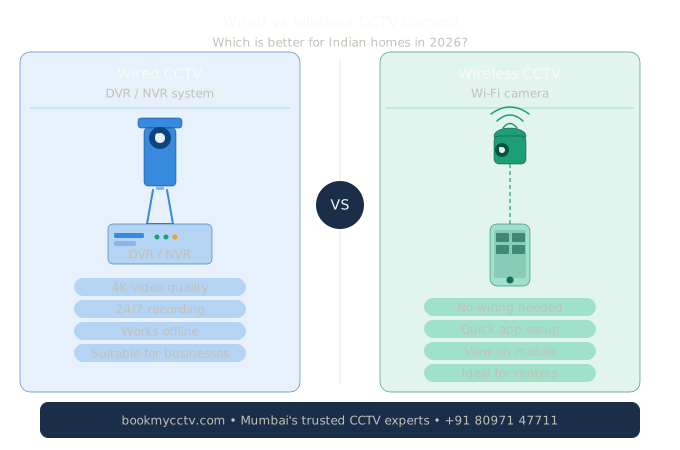
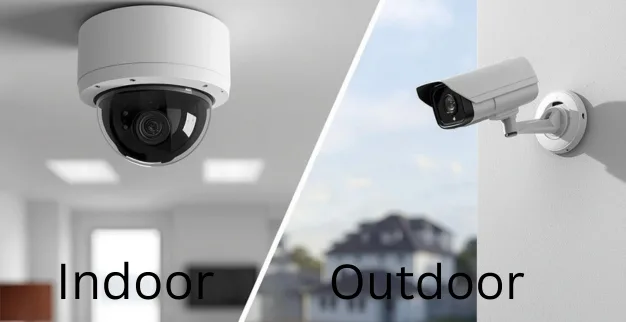
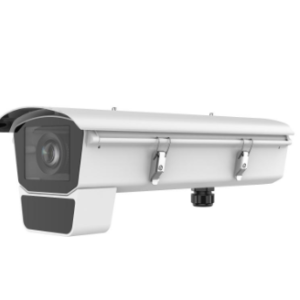
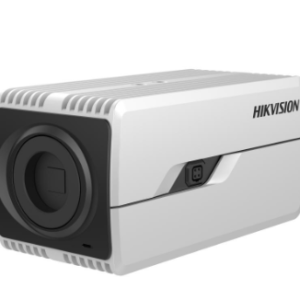
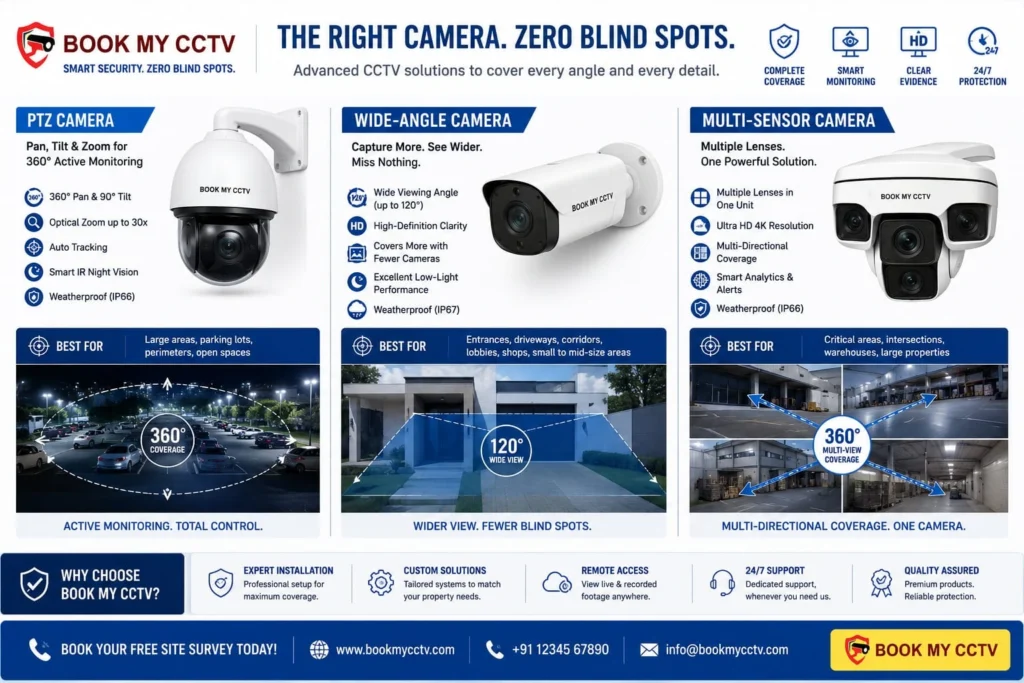
Fixed Cameras: Affordable and reliable, but limited to one view. Best for entry points and narrow areas.
PTZ Cameras: Flexible and wide-ranging. Ideal for large open spaces or areas prone to blind spots.
Wide-Angle Cameras: Cover more area per unit. Great for corners and large yards.
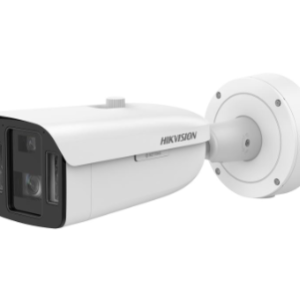
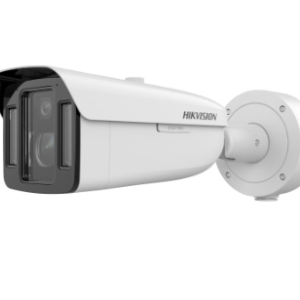
Multi-Sensor Cameras: Combine several lenses in one unit. Perfect for covering 180–360 degrees without multiple devices.
Common Mistakes That Create Blind Spots
Avoiding these mistakes helps you reduce CCTV blind spots from the start.
Skipping the planning stage. Installing cameras without a layout plan often leaves gaps. Always map coverage before installation.
Ignoring property changes. New furniture, plants, or structures can block existing cameras. Review your setup whenever your property changes.
Using too few cameras. Trying to save money by under-installing often backfires. More strategic placements mean better coverage overall.
Forgetting nighttime coverage. Daytime footage looks fine, but nighttime blind spots remain hidden until it’s too late. Always test your system after dark too.
Final Thoughts
Reducing CCTV blind spots takes a bit of planning, but it’s well worth the effort. A property with full coverage gives you real peace of mind.
Start with a simple walkthrough. Map your current coverage. Then make small adjustments like repositioning cameras, trimming obstructions, and adding lighting where needed.
With these steps, you can reduce CCTV blind spots and keep your entire property protected, day and night.