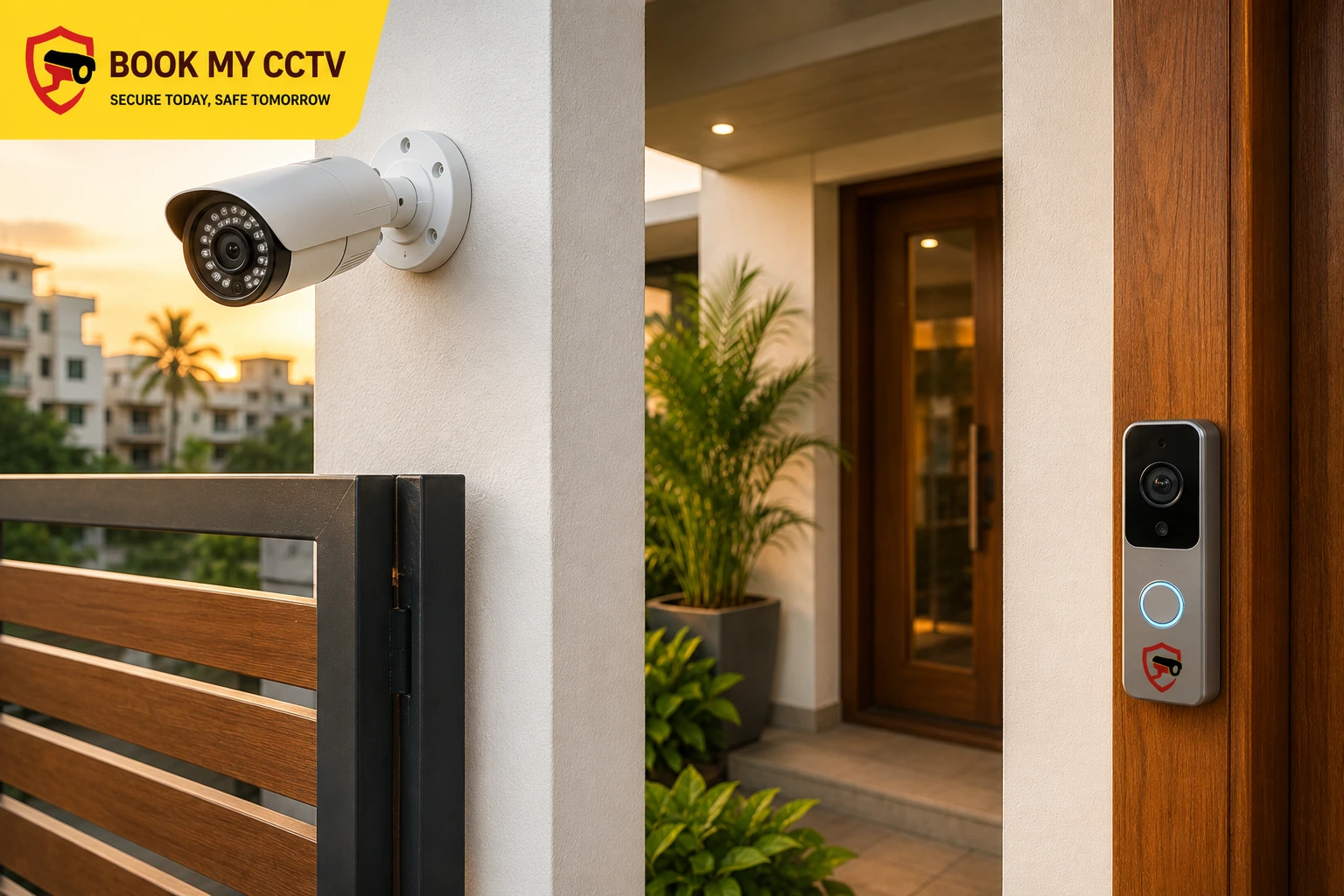
You’ve seen the ads. A slick video doorbell on an Amazon listing. It promises two-way audio, motion alerts, and smartphone notifications. It looks like the future of home security. But when it comes to CCTV vs video doorbell, which option actually protects your home better in India?
That’s the question most Indian homeowners forget to ask. In many cases, a video doorbell is not enough to keep your front door safe. Instead, a dedicated CCTV camera https://bookmycctv.com/ gives you continuous recording and wider coverage.
In this guide, BookMyCCTV breaks down how CCTV cameras and video doorbells compare across the factors that matter most: coverage, image quality, storage, night vision, cost, and real-world protection. By the end, you’ll know which solution fits your home, apartment, shop, or business best.
What Is a Video Doorbell in India?
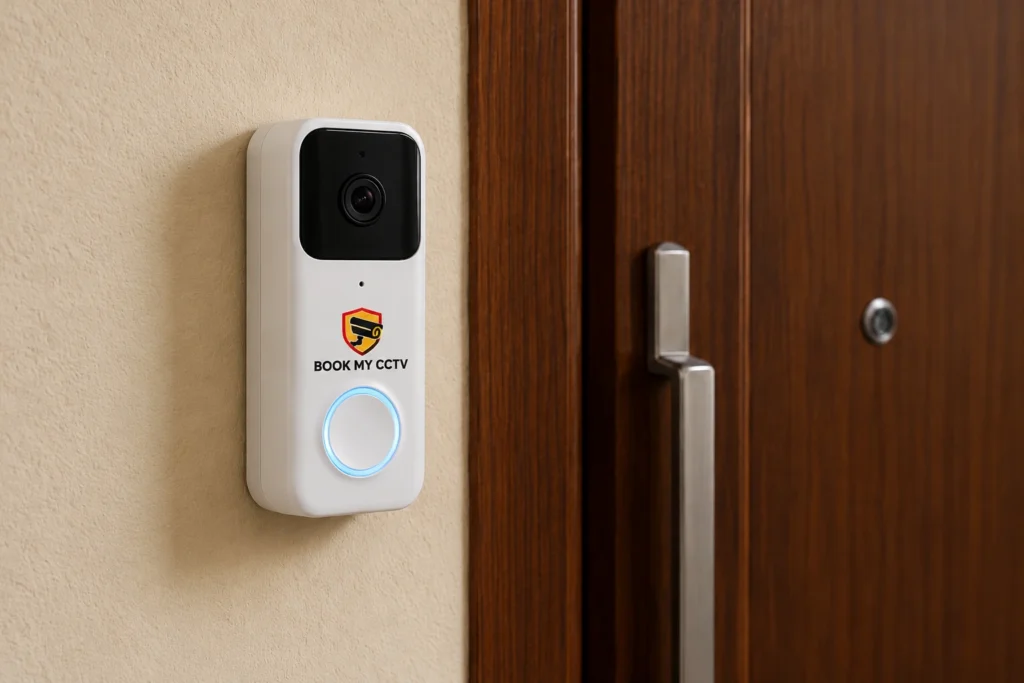
A video doorbell is a smart device that replaces or sits alongside your traditional doorbell. When someone approaches, it detects motion or pressing of the bell and sends a live video notification to your phone. Most models include two-way audio so you can speak to the visitor from anywhere. Popular brands in India include Ringhttps://ring.com/plans [Most brands charge a monthly subscription – Ring’s subscription plans start at ₹699/month in India], CP Plus, Hikvision, and Qubo.
Key features:
- Motion detection alerts on your phone
- Two-way audio (speak and listen)
- Live view via app
- Cloud or SD card storage
- Wide-angle lens (typically 160°-180°)
- Runs on existing doorbell wiring or battery
What Is a CCTV Camera for the Front Door in India?
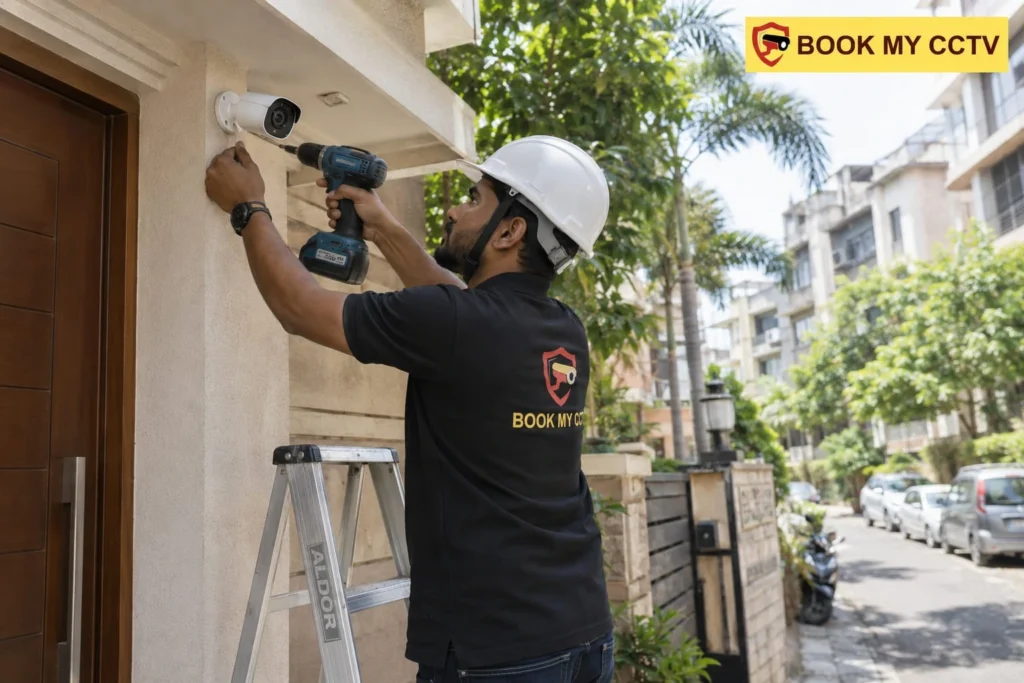
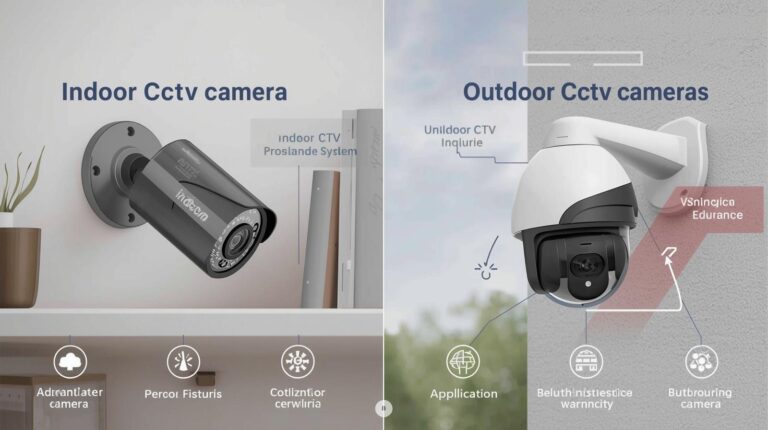
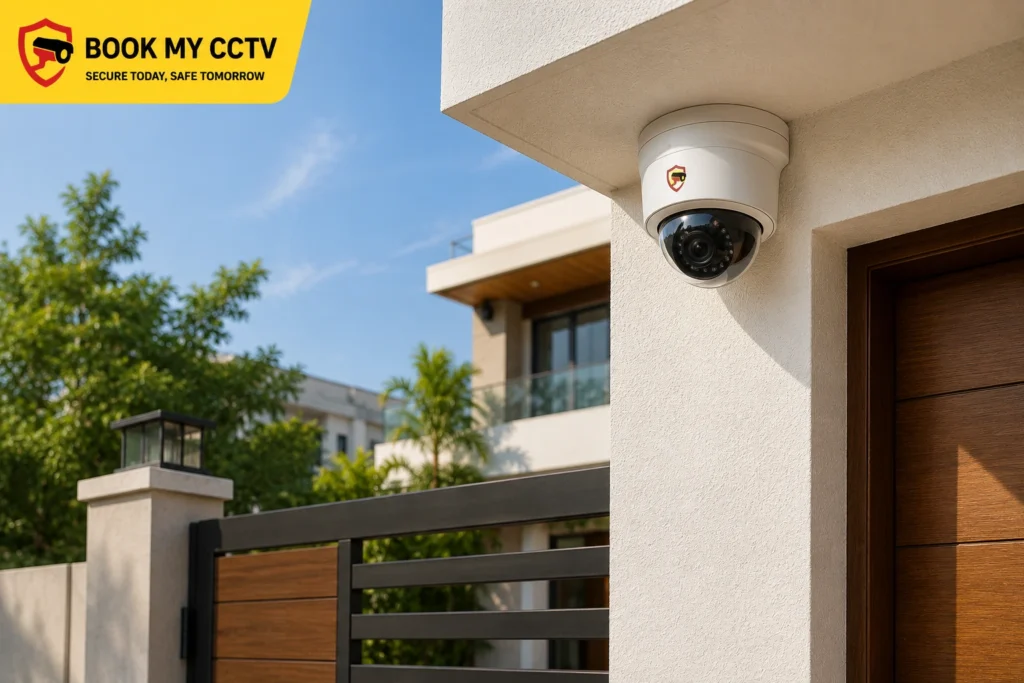
A CCTV camera installed at your front door is a dedicated surveillance camera – either IP or HD analogue – that records continuously or on motion, stores footage on a DVR/NVR or cloud, and provides high-resolution coverage of your entrance.
Key features:
- Continuous 24/7 recording
- High-resolution footage (2MP to 8MP)
- IR or colour night vision up to 30-50 metres
- Local storage via DVR/NVR (no monthly subscription)
- Part of a wider multi-camera system
- Tamper-resistant mounting
CCTV vs Video Doorbell India: Head-to-Head Comparison
1. CCTV vs Video Doorbell: Field of View and Coverage
A video doorbell has a fixed wide-angle lens (160°-180°). It captures whoever stands directly in front of it but offers limited depth beyond 3-4 metres.
In contrast, a CCTV camera can be adjusted to cover gates, driveways, and entry paths. It typically captures 10–15 metres clearly, including faces and vehicles.
Winner: CCTV – significantly broader and more flexible coverage.
2. CCTV vs Video Doorbell: Video Quality and Night Vision
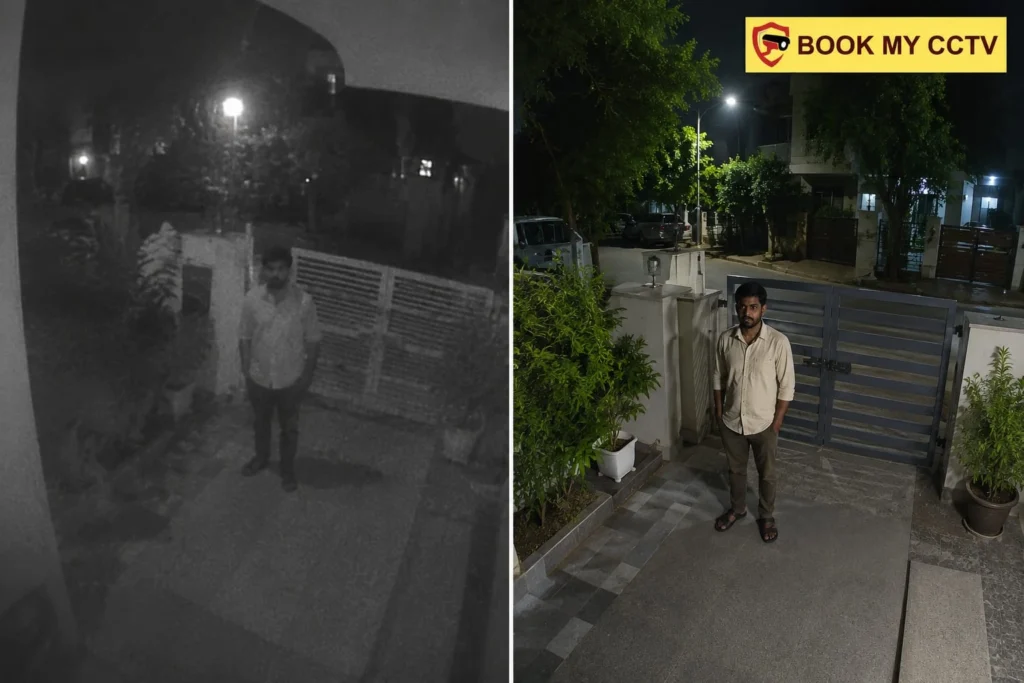
Most video doorbells in India record at 1080p, which works fine during the day. However, night performance varies, and footage often becomes grainy in low light.
On the other hand, modern CCTV cameras from brands like Hikvision, CP Plus, and Dahua offer better low-light performance. They provide IR or colour night vision up to 20–30 metres and higher resolution up to 4K.
Winner: CCTV – better night vision and resolution, especially on mid-to-high-range models.
3.CCTV vs Video Doorbell: Storage and Footage Access
This is where the difference is most significant for Indian homeowners.
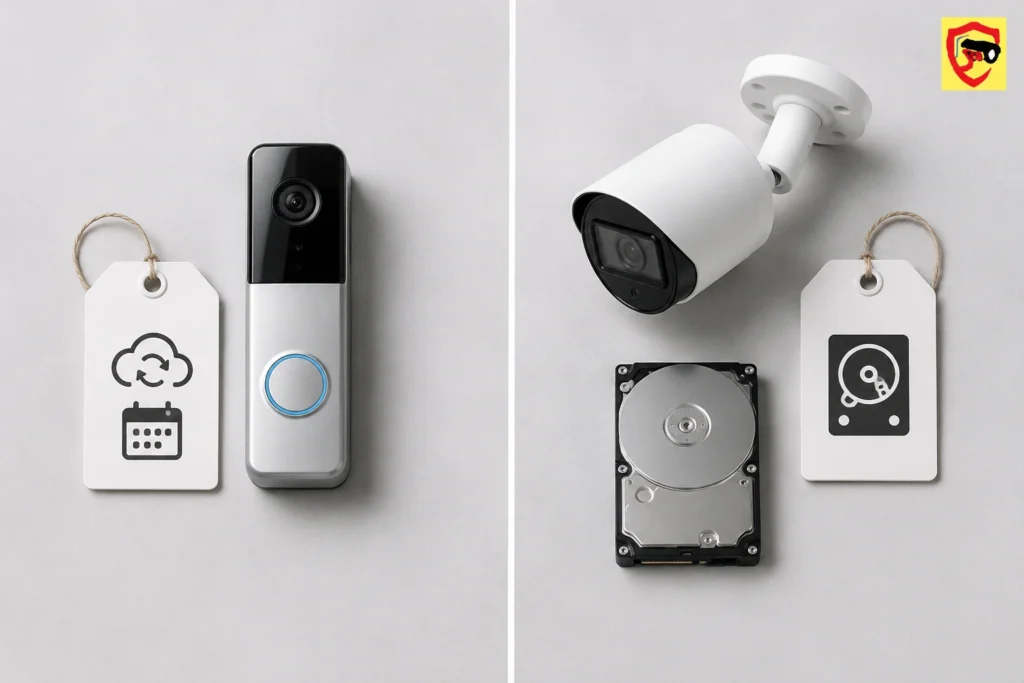
Video doorbells usually rely on cloud storage. Most brands charge monthly fees ranging from ₹699 to ₹1,299. Without a subscription, you may lose access to recorded footage.
CCTV systems store footage locally on DVR or NVR devices. A 1TB drive can store 15–30 days of recordings without any recurring cost.
Winner: CCTV – no subscriptions, more storage, local ownership of footage.
4. CCTV vs Video Doorbell: Two-Way Communication
This is where video doorbells stand out.
The built-in speaker and microphone allow you to speak to delivery people, visitors, or deter intruders in real time – directly from your phone, whether you’re inside or 500 kilometres away.
Standard CCTV cameras do not have two-way audio (though some newer IP cameras do).If communication matters most, especially if you travel often or manage deliveries, a video doorbell adds real value.
Winner: Video Doorbell – real-time two-way communication is a genuine advantage.
5. CCTV vs Video Doorbell: Installation and Setup
Video doorbells are designed for quick DIY installation. Most take only 15–30 minutes to set up and can run on batteries or existing wiring.
CCTV systems, especially wired ones, require professional installation, including cable routing and DVR configuration.
Winner: Video Doorbell – far easier to install without professional help.
6. CCTV vs Video Doorbell: Cost in India
Video Doorbell CCTV Camera (front door) Device cost ₹2,000- ₹12,000 ₹1,500 – ₹8,000 per camera Installation Self-install ₹1,500 – ₹3,000 professional Storage ₹700 – ₹1,300/month (cloud) One-time DVR cost ₹4,000–₹8,000 2-year total cost ₹18,000 – ₹43,000 ₹10,000 – ₹25,000
Over two years, a CCTV camera system is usually cheaper. That is because most video doorbells come with cloud subscription costs.
Winner: CCTV -lower long-term cost with no recurring subscription.
7. CCTV vs Video Doorbell: Tamper Resistance and Reliability
Video doorbells are mounted visibly at the door and can be physically removed, smashed, or disconnected. Battery models can also run out of charge. Wi-Fi dependency means they fail during internet outages.
Wired CCTV cameras are harder to tamper with, especially when mounted high up and covered with a housing. They operate independently of internet connectivity (for local recording), so a Wi-Fi outage does not stop recording.
Winner: CCTV – more tamper-resistant and reliable under real-world conditions.
So Which One Should You Choose?
The honest answer: it depends on what you are trying to solve.
Choose a video doorbell if:
- Perfect for flats and apartments with a single main entrance.
- Allows remote communication with delivery agents and visitors.
- Suitable for rental homes where permanent wiring isn’t an option.
- Easy to install and manage without professional assistance.
Choose a CCTV camera if:
- You have a house with a driveway, gate, or multiple entry points
- You want continuous 24/7 recording with no subscription
- Night-time security is a priority
- You want footage that can be used as evidence
- You run a shop, office, or commercial property
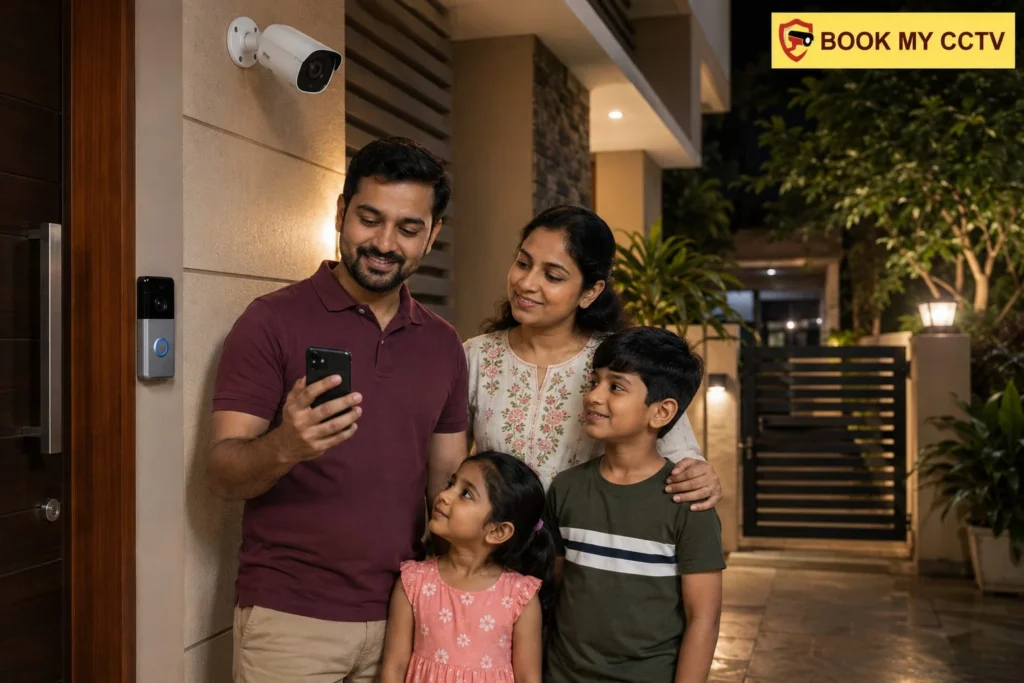
The best setup for most Indian homes: both.
Install a video doorbell for convenience and communication at the front door, and a CCTV camera angled to cover the wider entrance, driveway, and approach. Together they give you communication capability plus comprehensive surveillance coverage -without any gaps.
What BookMyCCTV Recommends
At BookMyCCTV, we see this question every week. Our recommendation for homeowners in Mumbai, Delhi, Pune, and Bangalore is almost always the same: start with a 2–4 camera CCTV system that includes one camera covering the front entrance, and add a video doorbell if you frequently have deliveries or want remote visitor communication.
For businesses – retail shops, offices, warehouses – CCTV is non-negotiable. A video doorbell alone does not provide the coverage, storage, or evidentiary quality that a business needs.
Frequently Asked Questions
Q: Can a video doorbell replace a CCTV camera in India?
For most homes, no. A video doorbell covers only the immediate door area and relies on cloud storage with a monthly fee. A CCTV camera provides wider coverage, better night vision, and local storage with no ongoing costs.
Q: Which video doorbell is best in India in 2026?
CP Plus, Ring, and Qubo are the most popular options in India. For homes already using a CCTV system, look for IP cameras with built-in two-way audio from Hikvision or CP Plus instead.
Q: Is a video doorbell enough for an apartment in India?
For a single-door flat with a main entrance covered by society CCTV, a video doorbell may be sufficient. For independent houses, a full CCTV system is strongly recommended.
Q: Does CCTV work without internet in India?
Yes. Wired CCTV systems record locally to a DVR or NVR and do not require an internet connection. Remote viewing via app requires internet, but local recording continues regardless.
Q: What is the cost of CCTV installation in Mumbai?
A basic 2-camera CCTV system in Mumbai typically costs ₹8,000–₹15,000 including installation. Contact BookMyCCTV for a free site survey https://bookmycctv.com/contact-us/
Final Verdict CCTV vs Video Doorbell India
CCTV vs video doorbell India- here is the one-line summary: a video doorbell is a convenience device, a CCTV camera is a security device. Both have their place, but if you can only choose one, a properly installed CCTV camera gives you more coverage, better footage quality, no monthly costs, and stronger long-term protection.
BookMyCCTV installs CCTV systems across Mumbai, Pune, Delhi, and Bangalore. Get in touch for a free consultation and site survey. https://bookmycctv.com/contact/